In this month’s blogpost, we dive into a key aspect of security in public spaces and urban planning: the consept of security by design. Dr Mattes covers the concept main features in this first part.
Protection of High-Risk Areas in Public Space – Part I; Security by Design – A Concept for Safe but Inviting, Liveable Public Spaces
In a constantly changing world, security authorities, as well as cities and municipalities, face the challenge of designing our public spaces to be both safe and inviting. The practical approach known as “Security by Design” aims to seamlessly integrate protective measures into urban areas without sacrificing their beauty and functionality. This blog post demonstrates how security concepts can merge with design aesthetics to create public spaces that are both secure and liveable:
Public Spaces in the Focus of Counter-Terrorism
Public spaces such as parks, shopping centres, and transportation hubs are indispensable parts of urban life. They promote social interactions and are important meeting points for the community. Unfortunately, due to their open and easily accessible nature, they are also vulnerable to terrorist attacks or rampages. Security authorities therefore pursue an approach in which security aspects are incorporated into the design of new public spaces right from the beginning of the planning phase or at the outset of re-planning phases. The goal is not only to introduce protective measures through Security by Design, but also to integrate them in such a way that the usability and aesthetics of the places are preserved.
The Four Pillars of Security by Design
There are four central principles in the concept Security by Design – proportionality (security measures should be commensurate with the risk to avoid excessive intrusion into people’s daily lives), multifunctionality (security solutions should also serve other purposes, such as seating or decorative elements), aesthetic design (security measures should be integrated into the urban landscape and designed to be visually appealing to avoid creating a “fortress mentality”), and collaboration (the development and implementation of security concepts are carried out in close coordination with architects, planners, security authorities, and the local community.
Practical Implementation of Security by Design
A good example of the implementation of Security by Design can be found in the city of Stockholm. After an attack with a stolen truck in 2017, concrete barriers were replaced by heavy flowerpots and reinforced obstacles. These were arranged to block potential attack routes without hindering pedestrian use of the space. The solution is discreet planned and blends aesthetically into the cityscape.
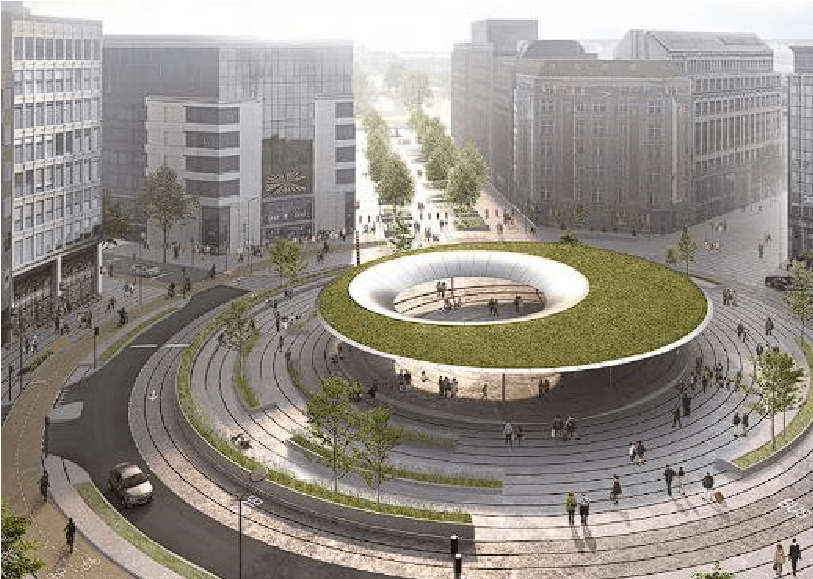
Another example is the redesign of the Schuman Roundabout in Brussels. Here, a new concept was developed that unites the needs of security, mobility, and social interaction. The roundabout was designed with multifunctional elements such as benches, planters, and lighting, making the space both inviting and safe.
Security Through Landscape Design
The Landscape design offers great potential to make public spaces safer, too. A design competition in Paris for the area around the Eiffel Tower in forehand of the 2024 Olympic Games aimed to make the landscape safer while also more attractive. The planners designed raised beds and elevated lawns that hinder vehicle attacks while simultaneously serving as recreational areas. This type of security design is particularly effective because it combines functional and aesthetic needs. Along the traffic routes, a bulletproof glass wall was erected without impairing the historical visual axis. Where the Eiffel Tower borders gardens, the wall was complemented by a metal fence made of steel. The 72 mm thick glass construction is embedded at the base and leaves the upper edge untouched to ensure an unobstructed view of the Eiffel Tower. The glass elements have a ballistic protection class.
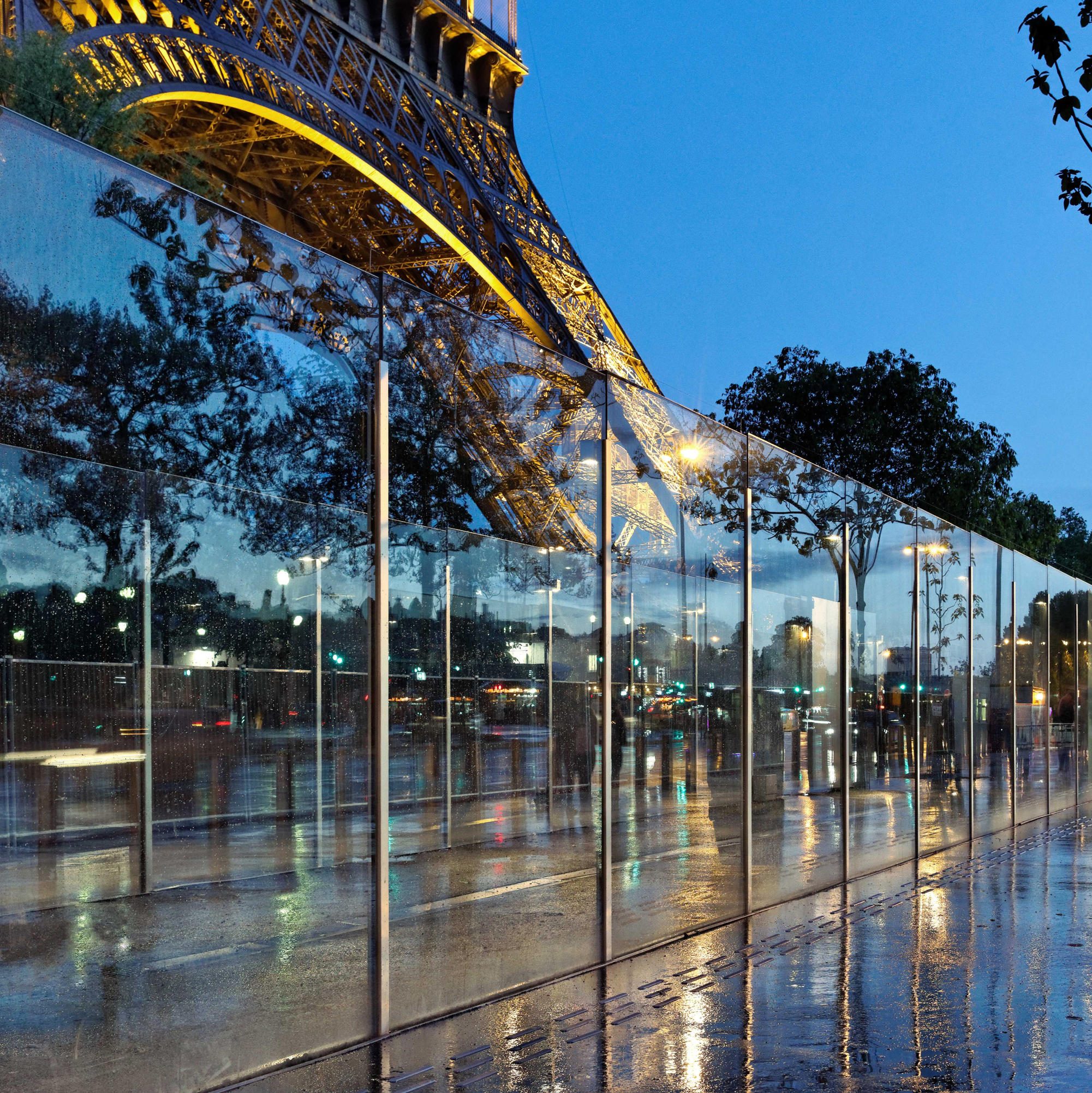
Source: CEPOLIS – HfoeD
Economic and Social Aspects of Security Measures
Security by Design is more than just technical measures. Economic and social aspects are also taken into account to ensure a balance between security and quality of life. For example, the benefits of a security measure should be weighed against the costs and possible restrictions for citizens. Studies show that excessive security measures can also have a negative impact on people’s sense of security. Security by Design therefore emphasizes proportionality in order to avoid unnecessary burdens and maintain the accessibility and openness of public spaces.
Challenges of the Future
The further development of public spaces is influenced by technological and societal changes. Climate change, new forms of mobility, and increasing digitalization shape urban infrastructure. Security concepts must therefore be flexible and adaptable to adequately respond to future threats.
Role and Self-Perception of the Police in Context
Police authorities play a key role in the practical implementation of the Security by Design concept by incorporating their knowledge of local threat situations and crime prevention measures into urban security planning. By working closely with urban planners, architects, and security consultants, they can create concrete threat assessments that inform the design of public spaces. In risk assessment, police officers assess potential vulnerabilities and help ensure security measures are proportionate and effective, thereby maintaining the functionality and aesthetics of sites. In addition, they promote the population’s sense of security through targeted awareness campaigns and the dissemination of emergency behaviour guidelines. Through their continuous presence in public spaces, police officers carry out preventative work and strengthen cities’ resilience to threats, while maintaining the openness and accessibility of public spaces.
New software applications allow police officers to bring the security by design approach to life in a completely new way – even in the early planning stages of public spaces. This approach aims to integrate security aspects into the planning and design of public infrastructure from the outset in order to proactively minimize risks. In the planning and re-planning phase of public spaces, software tools can play a crucial role by providing comprehensive security analysis and simulation-based scenarios.
Using software solutions that utilize geographic information systems, planners can identify and analyse potential safety risks before construction activities are implemented. Such systems make it possible to include various factors such as crime rates, lighting conditions, escape routes and the use of public spaces in holistic planning. Additionally, virtual simulations can help evaluate different design options for their impact on safety. Citizen feedback and community engagement via digital platforms can also be integrated into this process to ensure residents’ opinions and needs are considered. This participatory approach not only increases trust in security concepts, but also leads to more sustainable and effective solutions tailored to the specific needs of each community. The early integration of modern IT technologies into the planning phase lays the foundation for a safe and functional public space that meets the needs of all users.
Conclusion
In an ever-evolving world, Security by Design ensures public spaces remain safe yet inviting. By integrating protective measures into urban designs, we maintain both functionality and aesthetics. This balanced approach is pivotal for modern urban planning, enabling secure, beautiful, and accessible spaces. Through collaboration and innovative methods, cities can create environments that protect without imposing, fostering a sense of security and freedom. The police play a crucial role in this process by providing threat assessments and ensuring measures are proportional and effective. The use of new software tools further supports the police in this endeavour, allowing for comprehensive security analyses and simulations that enhance public safety planning. The future of public space hinges on this thoughtful blend of security and liveability.
In part two of the blog post, the topic of Security by Design will be discussed in the context of a recent attack scenario – the attack on September 5th in Munich, near the Israeli Consulate General.
Keywords:
#TerroristThreats, #ProtectiveMeasures, #RiskManagement, #UrbanSafety, #CrimePrevention, #SecurityByDesign
Author:
Tobias Mattes, Dr (Team CEPOLIS, HfoeD)
 SPIRIT