From 22 to 24 April, the Parisian offices of Google hosted a large and diverse group of professionals for the 15th Conference of the Association of European Threat Assessment Professionals (AETAP). This annual event invites experts in threat assessment, with backgrounds ranging from forensic psychology, to criminology, law enforcement, military, academia etc., aiming to exchange of knowledge, expertise, new-found methodologies and tools, as well as increasing one’s network. As the threat landscape is rapidly evolving, it is essential for professionals to stay updated with global trends on risk/threat assessment and management and the Conferences hosted by the AETAP and the sister associations seem to be the opportune environment for that.
This year, the Conference gathered approximately 150 participants, from India, South Africa and mostly Europe. The Conference also gathered representatives of the sister organisations from the US and Canada (ATAP and CATAP). Out of the Europeans present (either speakers or participants), it was discussed that Eastern and Southern Europe did not have numerous participations across the AETAP conferences and activities. It was highlighted that threat assessment and management, as a practice and as a field of study, is still not considered transversal. It is governed by a silo mentality, thus occasionally hindering the exchange of good practices, information, research results and new tools that could be adapted from one field of application to another. When discussing the participation to conferences and in-person activities, one of the obstacles that practitioners/professionals seem to face is lack of sufficient funding for such occasions, as expressed by numerous participants present.
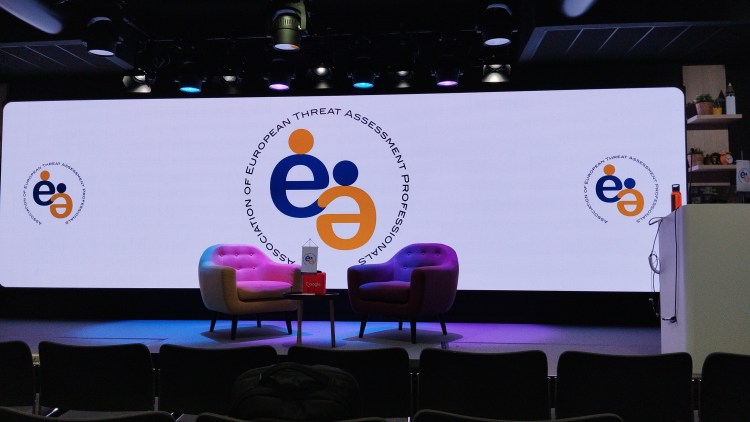
The Association envisions to continue its efforts of engaging professionals, expanding the current network of partners and increasing the opportunities for more practitioners to participate in its activities, bridging the gaps between geographic and scientific borders. Practitioners across Europe are also encouraged to reach out to the AETAP Board and extend invitations to the Board Members and the wider network of threat assessment experts for any local/national activities, in order to create transnational synergies and contribute to a pool of knowledge and resources.
The Conference lasted for 3 days, with one additional day dedicated to a workshop on ‘Violence Risk Triage Using the AVRT’, conducted by Dr Stephen Hart. The speakers covered threat/risk assessment and management approaches in a plethora of occasions, from cognitive biases and sensitive data in threat assessment, to sexual violence, retail sector threats and grievance-fuelled violence. Expectedly, artificial intelligence and advanced technology in threat assessment were subjects of discussion. The integration of AI and new technology into threat assessment processes offers the advantage of faster data analysis, enabling the timely identification of concerning behaviours or content. Organizations must also develop an AI strategy to effectively assess and prepare for AI-related threats, while also leveraging AI opportunities. This entails the adoption of new and improved software, as well as adherence to new laws governing technological advancements. However, practitioners and public organisations, such as LEAs are often lagging in technological knowledge and procurement.

A couple of themes quite close to the work of the SPIRIT project revolve around the factors considered during an assessment and violent extremism & grievance-fuelled violence. Contextual and environmental factors play a significant role in influencing perpetrators, apart from biological, psychological and social, and should therefore be considered in threat assessments. This is particularly relevant in the context of grievance-fuelled violence. Context and environment influence perception. And grievances are born under a set of factors, but also triggered by certain events, which emphasizes the importance of recognizing the longer timeframe between grievance and attack. This extended period provides an opportunity for intervention, potentially preventing acts of violence, as long as the assessment considers the factors that can cause grievances. Interestingly enough, recent trends indicate that violent extremist acts are primarily carried out by lone individuals motivated by personal grievances, rather than direct association with extremist groups. Notably, risk assessment and management practices in violent extremism and grievance-fuelled violence are still evolving, with ongoing developments in evidence-based approaches. The SPIRIT Enhanced Vulnerability Assessment Methodology was also presented at the conference, by the task leaders IANUS Consulting Ltd. It was the only presentation referring to protection of places of worship, with a horizontal consideration of prevention and preparedness. Through the Conference, SPIRIT has started creating synergies for the dissemination and exploitation of project results and its respective partners, thus expanding its impact, by both contributing to the threat assessment landscape, while also capitalising on the invaluable lessons shared by esteemed experts.
Author: Georgia Anagnostaki
 SPIRIT